Have you been wondering why...
You’ve been speaking English for years, but you still have a heavy accent?
For many of my clients, the first challenge is simply learning the American English sound system. English has A LOT of vowel and consonant sounds, and several of them may not exist in your first language or may be very different from the sounds you're used to.
And even when you learn the sounds of American English, producing them naturally can still be difficult.
That’s because the sounds of your native language are created using specific tongue, lip, and jaw movements that you have practiced for years.
Different languages use different tongue and lip movements, different muscle coordination, and different ways of shaping sounds.
So when you learn a new English sound, you are not just learning a new sound. You are also learning a new way to move your mouth.
This is why you can understand exactly how an American sound should be produced and still struggle to make it sound natural. Your mouth is used to the way you've been moving it in your first language.
Changing your accent requires both learning the American English sound system and developing the physical control needed to produce those sounds naturally.
And the good news?
that is exactly what you'll find in my video course.
Introducing
The American Accent
Muscle Training Course
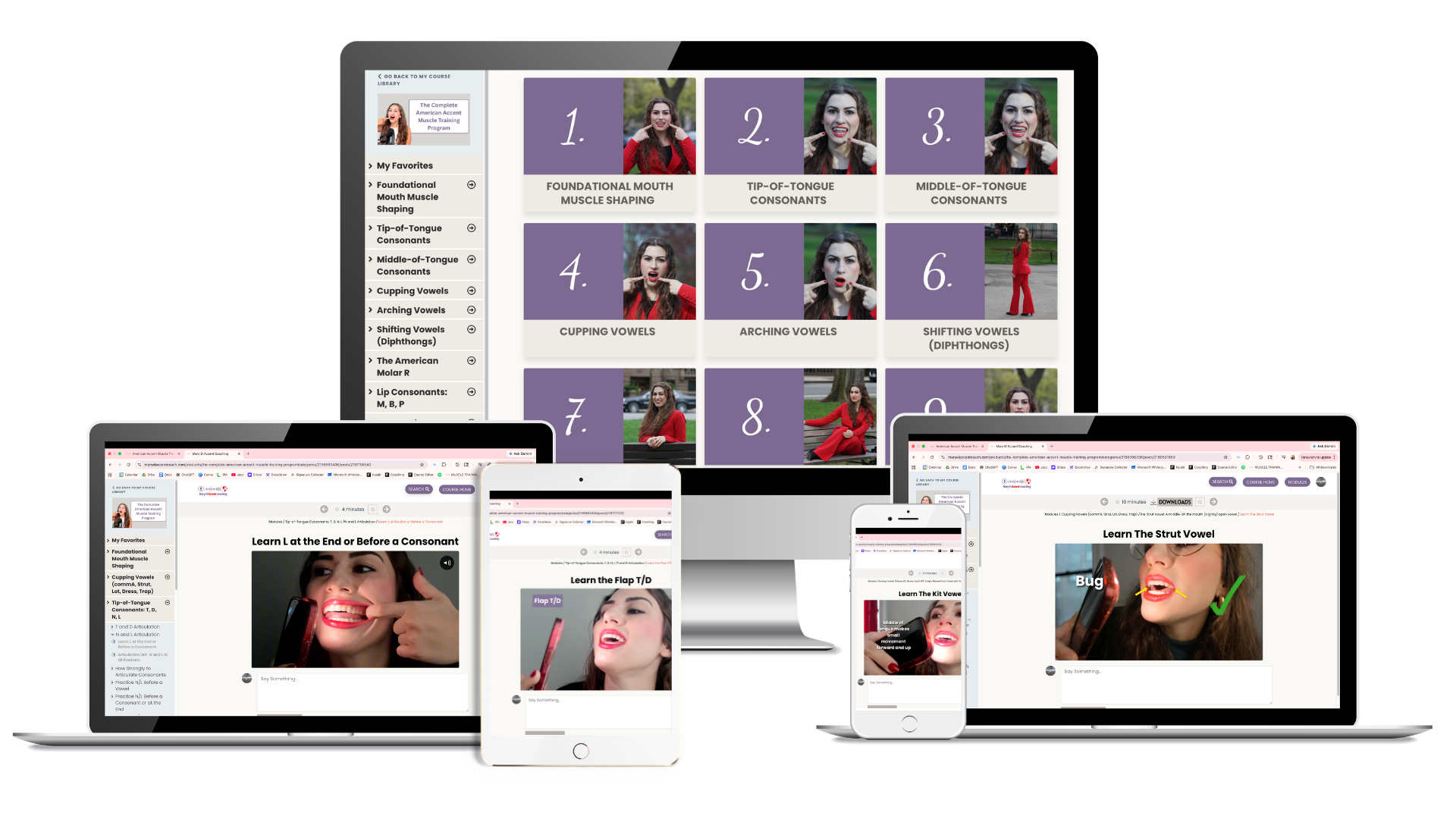
Learn the American sound system—and learn how to physically produce it.
My approach combines two things that are both essential for changing your accent: learning the American English sound system and learning the precise tongue, jaw, and lip movements that make those sounds sound American.
You'll learn all of the major American English vowels and consonants. But for each sound, we go much deeper than simply learning its pronunciation.
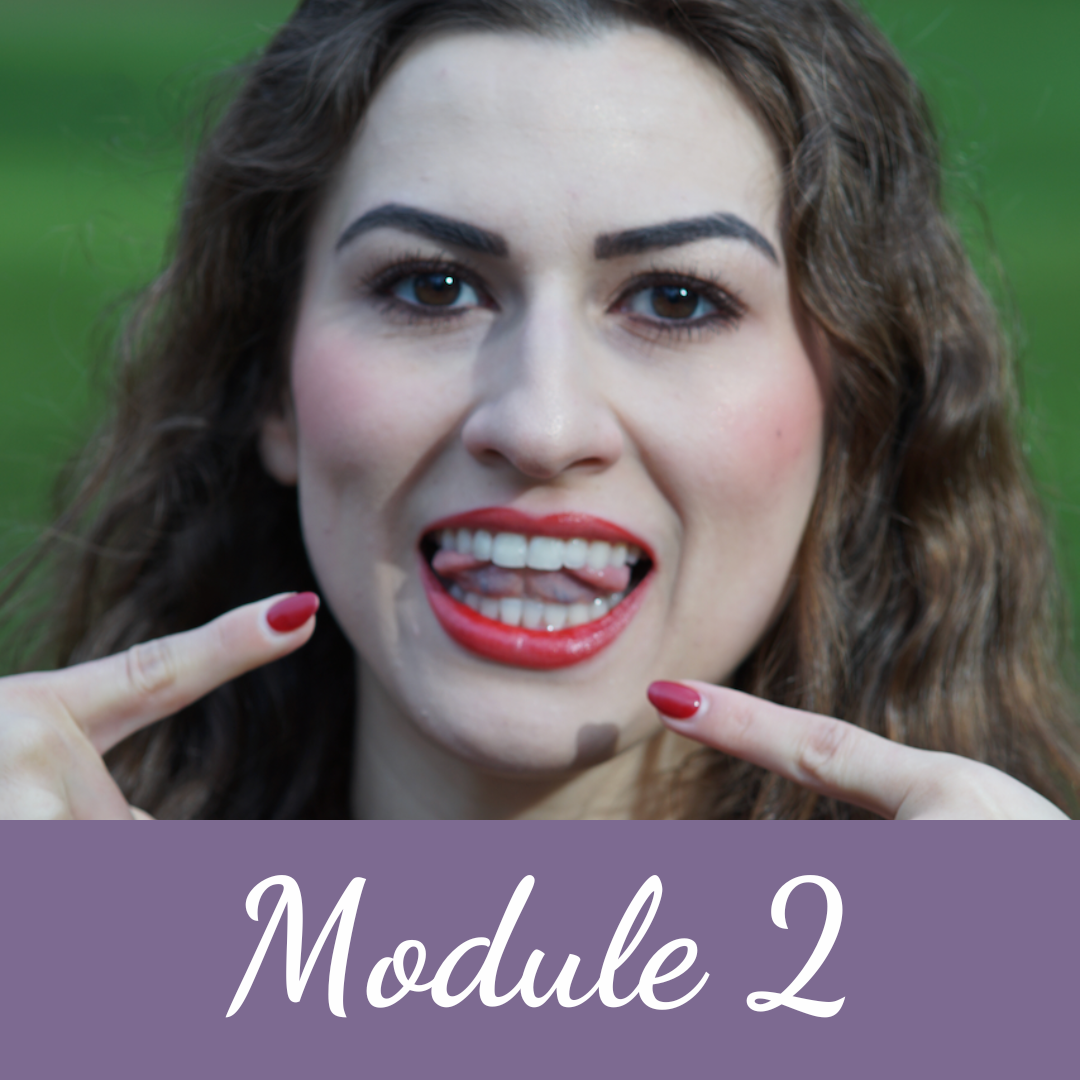
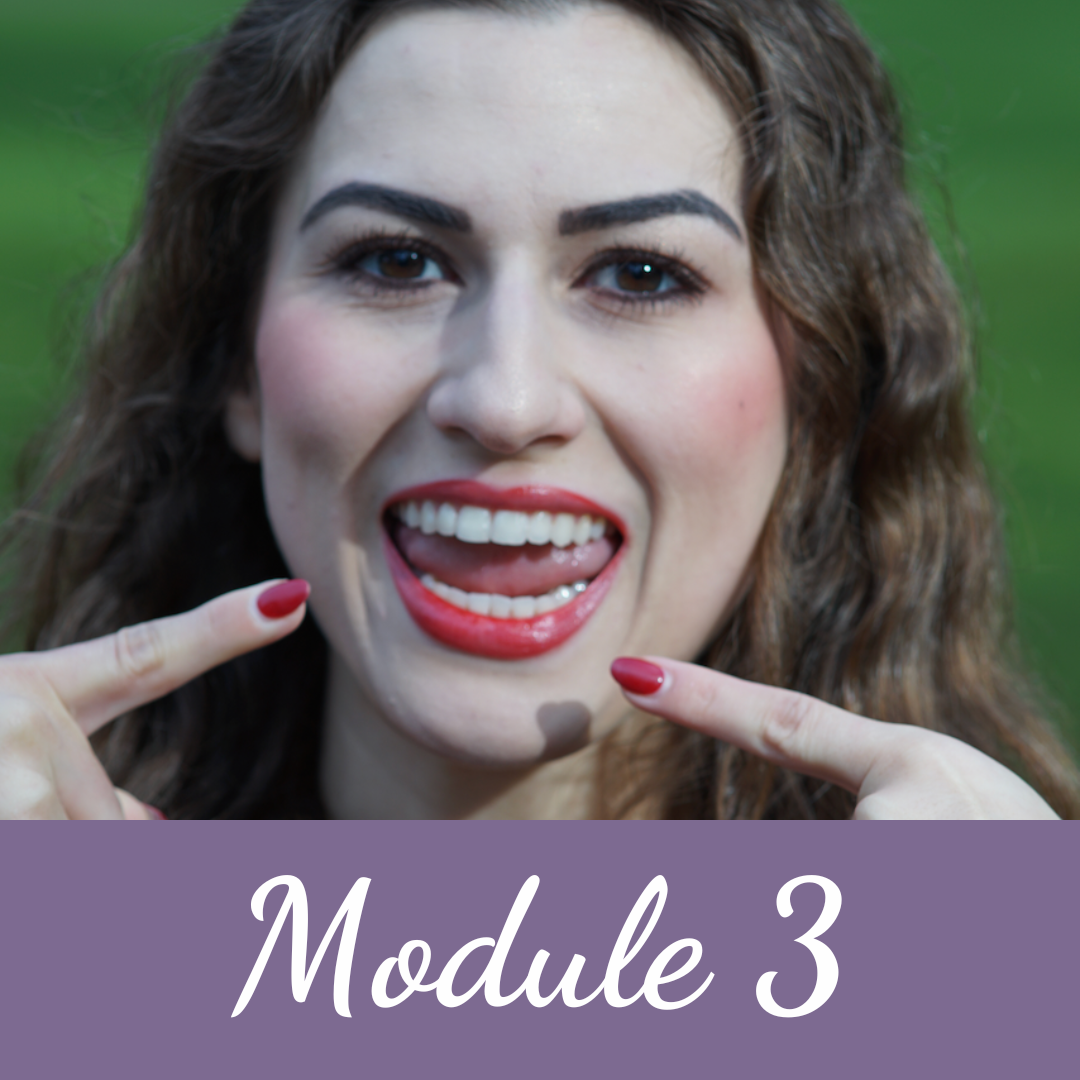
I'll teach you the tiny details of how your tongue needs to move and how the muscles of your tongue need to work together to produce the sound.
Because simply putting your tongue in approximately the right place isn't always enough.
For example, you might put your tongue in the right general position for the American /æ/ sound, but if you're using the wrong part of your tongue, shaping it differently, or using the muscles differently, your /æ/ can still sound influenced by your first language.
That's where the detail matters.
You'll learn how to make these sounds using the specific tongue movements and muscle coordination that give American English its characteristic sound—so you're not simply producing an American sound with the habits of your first language.
WHAT? YES PLEASE!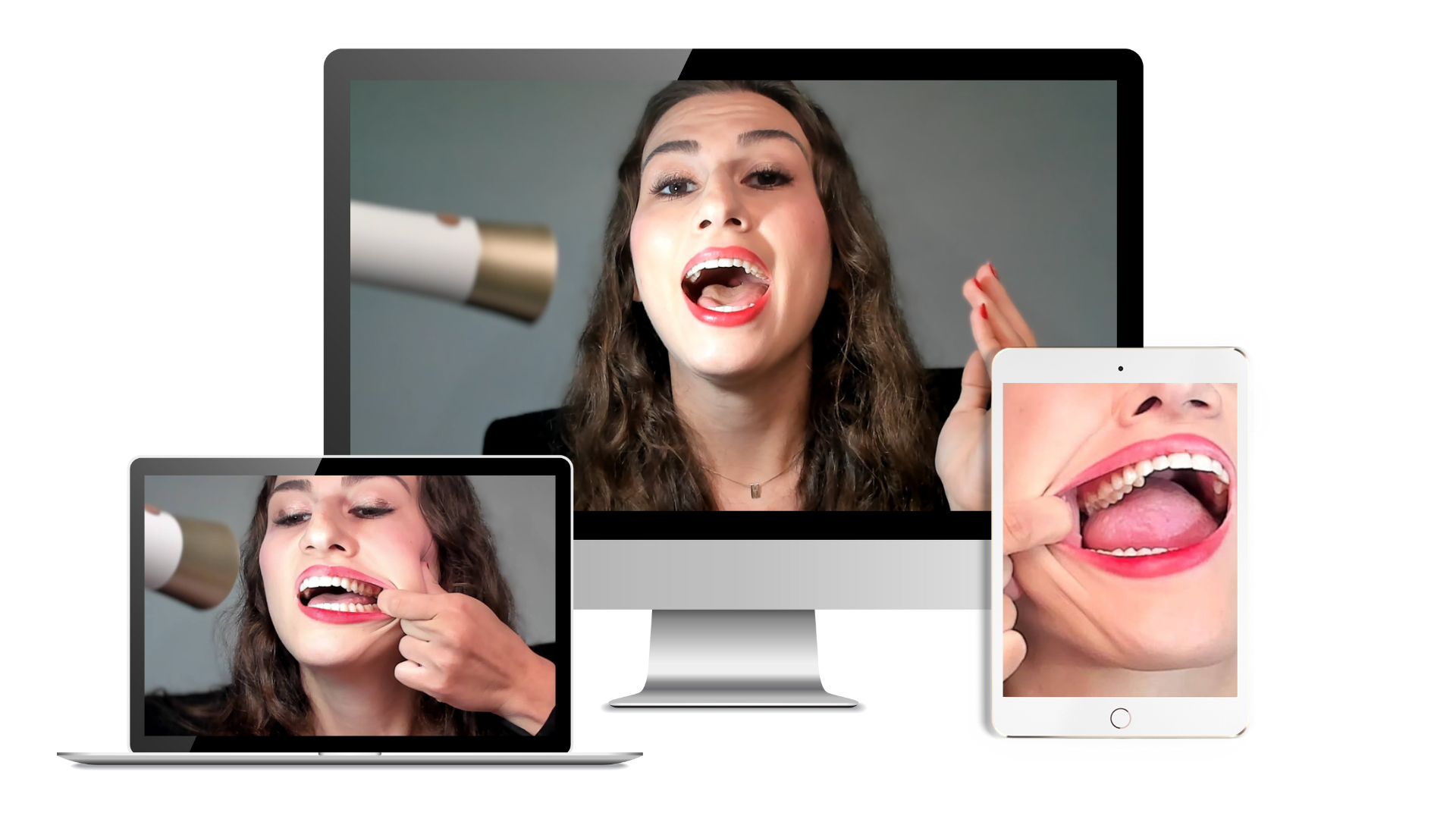
Waiting for you inside

🎥 290+ Guided Lessons
A complete step-by-step curriculum covering foundational mouth muscle training, vowels, consonants, the American R, connection, rhythm, and stress.
📄 Downloadable PDFs
Each practice video comes with a matching PDF filled with targeted word and phrase drills. Perfect for focused repetition and daily practice.
📅 1 Year of Access
Enough time to work through the material gradually and focus on mastery rather than speed.

✉️ Email Support
Have a question while you're working through the training? You can reach out by email.
Student Case Study
“I wish I’d found her sooner.”
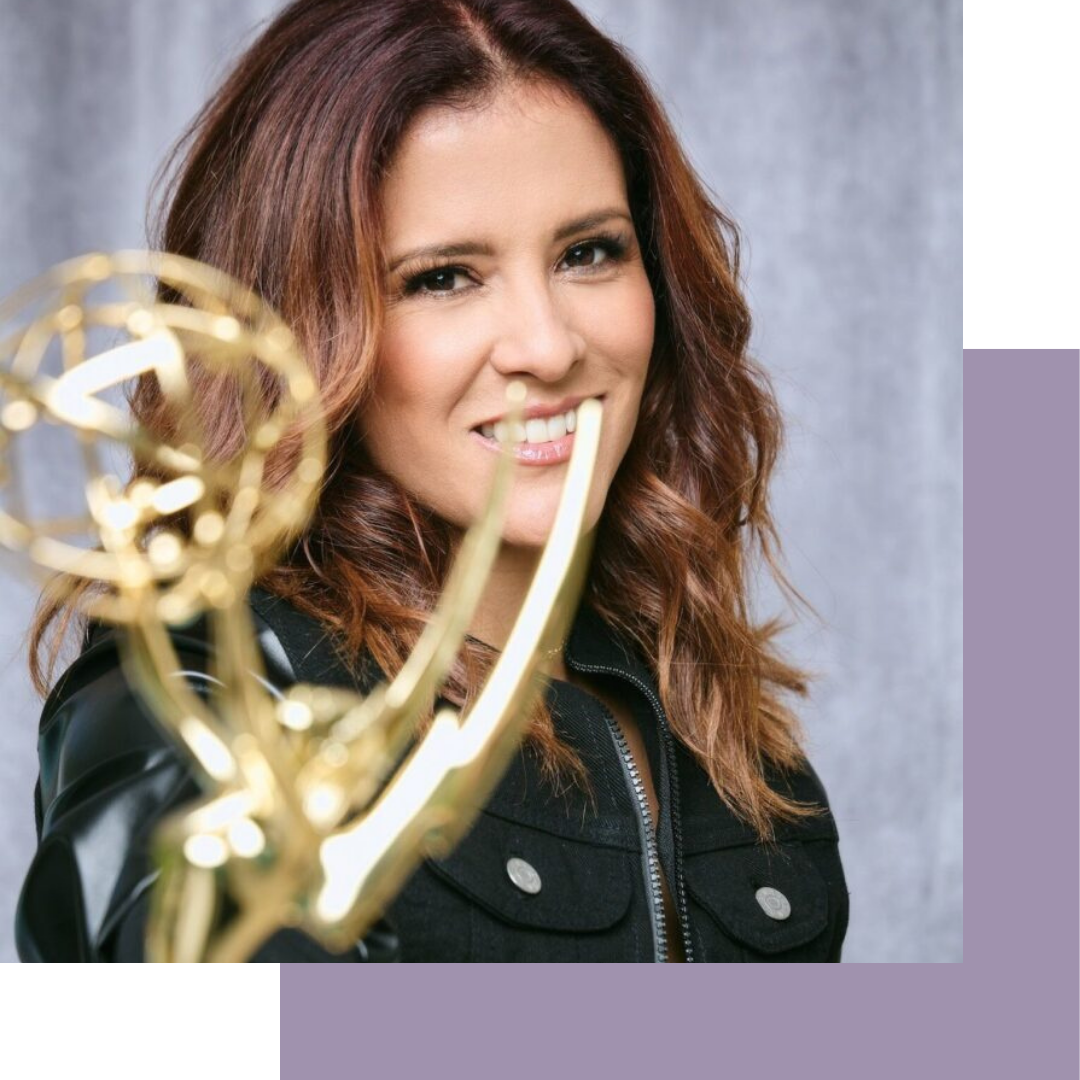
Adriana Monsalve is an Emmy-award-winning sports caster from Venezuela with more than 20 years of experience in media. She came to me because she wanted her English communication to reflect the same confidence and personality she naturally has in Spanish.
Through detailed accent training, she became more aware of the pronunciation habits affecting her speech and learned how to make specific changes to improve her clarity and overall communication.
“Mary helped me realize mistakes I was making in my pronunciation and gave me professional tools and techniques to improve.”
After nearly a year of training, Adriana said:
“What can I say? I wish I’d found her sooner.”
— Adriana Monsalve, Sports Caster
Program Investment
LET'S RECAP
"After years of studying English and still struggling with pronunciation— to the point where I thought I had hearing issues or something wrong with my tongue— I discovered Mary, and working with her and her videos has been the best thing that ever happened to me.
I realized there’s nothing wrong with me— I just didn’t know how to use my tongue muscles or how to make the movements required to speak English clearly.
By following all the information in her videos, I’ve been able to improve my pronunciation, and I constantly go back to review them because they’re so detailed, I don’t want to miss anything."
- Client from Colombia
"This is pure science. The price for your course is very fair, I studied pronunciation back in college and the course at my college is $4,000 and they don't teach like you.
Seeing the shape of the tongue and trying to copy that really changed the way I pronounce things."
- Comment left inside the course by a student who purchased it without coaching.
"While other accent video courses and resources follow a "tips and tricks" approach, Mary's materials take a completely different approach. They focus on building a strong foundation of muscle habits.
It's a more challenging method, but definitely the right one for those looking to *really* achieve a native American accent. The videos are top-notch in production quality, density, and value."
- Client from Spain
"Her videos are very demonstrative of tongue positions.
She makes it very clear where the tongue is supposed to be."
- Client from Albania
Frequently Asked Questions
What’s the difference between the self-paced course and private coaching?
How is this different from your YouTube videos?
What if I have questions as I work through the course?
How long will I have access to the course for?
Hey, I'm Mary El
American Accent Coach for Professionals
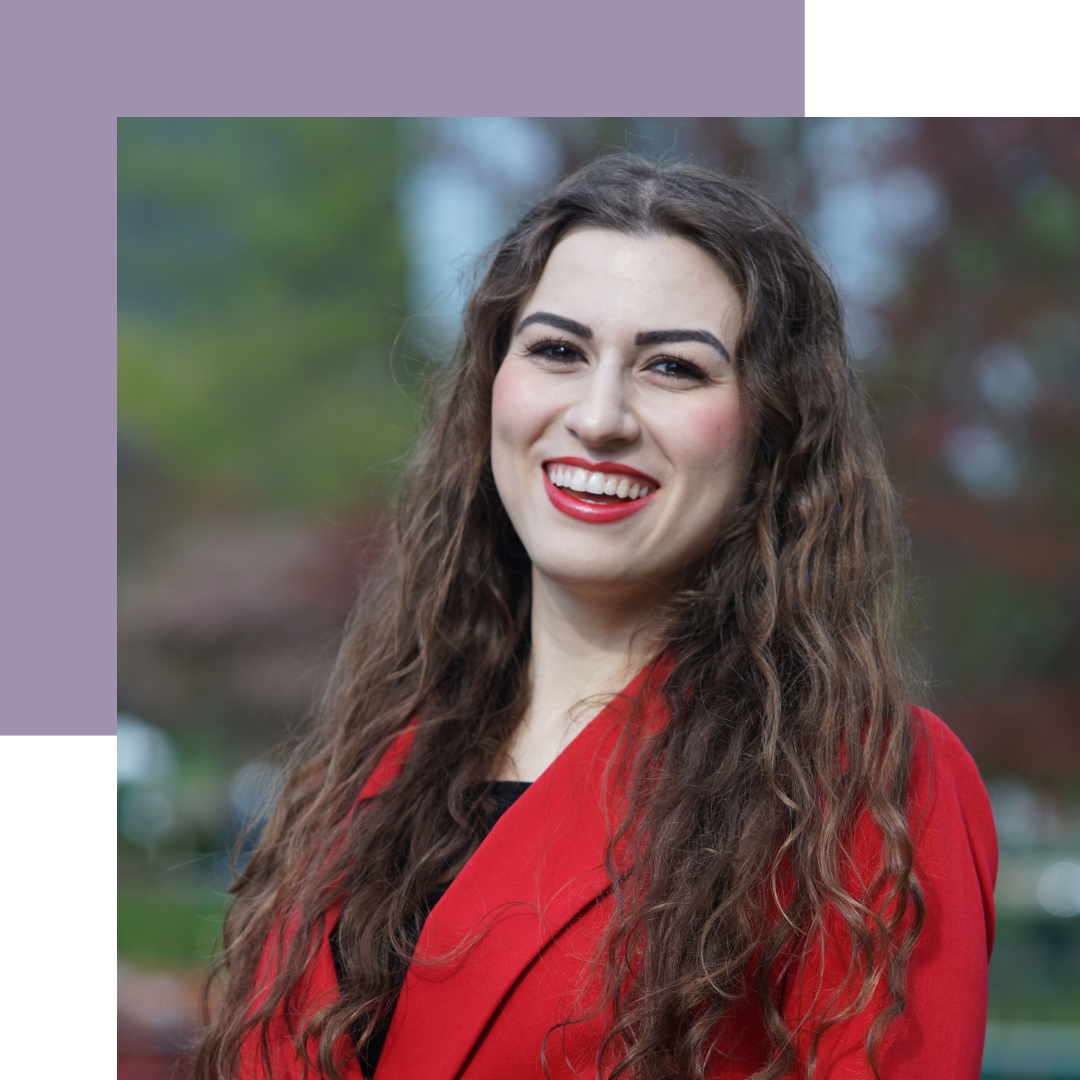
I’m an American accent coach who specializes in helping non-native English speakers develop a clearer, more natural American accent.
My approach goes far beyond telling you to “move your tongue here” or “make this sound.” I teach the small details of tongue position, tongue shape, and muscle coordination that affect how an American English sound is actually produced.
I’ve worked with professionals from a wide range of language backgrounds, including Spanish, Russian, Polish, Chinese, French, Italian, Arabic, and German. Over the years, I’ve developed a detailed training system that addresses both the American English sound system and the physical skills needed to produce it.
This course brings that training system together so you can work through it independently, with the same level of detail I use when teaching clients privately.